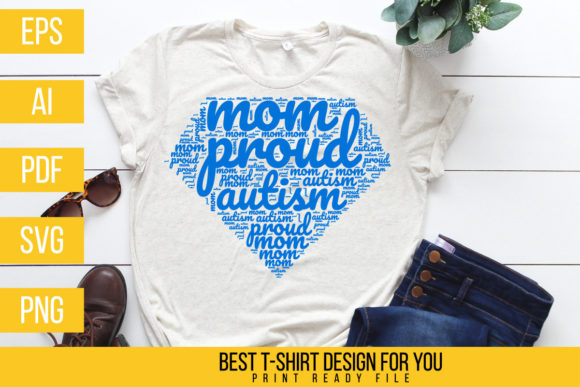
Proud Autism Mom T Shirt Design
First Impression: Warm, Clear, and Thoughtfully Composed
When I opened the Proud Autism Mom T Shirt Design, what struck me first wasn’t just the heart or puzzle piece—it was how intentionally balanced the layout felt. The typography has gentle weight, the iconography is centered but not stiff, and the overall shape reads cleanly at a glance. That matters more than you’d think when translating a vector into an embroidery file. This isn’t a cluttered graphic or a dense typographic maze—it’s got breathing room, which means it’ll translate well to stitch without collapsing detail or demanding excessive digitizing cleanup.
A Real Project Moment: Embroidering a Soft Cotton Tote for a Local Support Group
Last week, I used the Proud Autism Mom T Shirt Design as the centerpiece for a set of custom cotton tote bags—meant for moms attending our community’s monthly autism resource meetups. I chose a medium-weight natural canvas, paired it with tear-away stabilizer, and stitched it on the front panel, centered just below the handle seam. The result? Crisp edges, legible lettering, and a design that held its warmth without looking stiff or overly commercial. People paused to read it—not because it shouted, but because it invited quiet recognition. That’s the kind of emotional resonance this design supports: personal, grounded, and respectful.
Where It Shines in Real Embroidery Work
- Custom apparel: Works beautifully on crewneck sweatshirts and relaxed-fit tees—especially when placed left-chest or center-front. The moderate width and vertical rhythm suit standard hoop sizes without crowding.
- Baby items & nursery decor: Scaled down to ~3.5” wide, it reads clearly on onesies and pillow covers. The clean lines avoid tiny fill-stitch traps that snag during washing.
- Embroidered patches: Its balanced negative space makes it ideal for heat-press or sew-on patches—no floating elements or fragile stems to fray.
- Holiday and gift embroidery: Paired with soft thread colors (heather gray, sage, dusty rose), it reads gently on tea towels and kitchen aprons—ideal for thoughtful, non-generic gifts.
- Etsy listings & small shop products: As a digital embroidery file, it’s versatile enough for printable mockups and layered product photos—helping craft business owners show real-world use, not just flat vectors.
Where to Pause—and Plan Ahead
This design walks a fine line between simplicity and expressiveness—and that means it needs thoughtful placement. On stretchy knits or thin fabrics like lightweight rayon blends, I recommend testing with light cutaway stabilizer first. Dense satin-stitched areas (like outlined hearts or solid puzzle pieces) can pucker if hooped too tightly or stitched without proper tension calibration. And while the lettering is generous, don’t push it smaller than 2.75” wide on curved surfaces like caps—the curves of the crown can distort subtle kerning.
Also worth noting: the design’s strength lies in its clarity, not complexity. So if your project relies heavily on delicate decorative accents—think tiny stars, micro-borders, or layered applique—you’ll want to add those separately. The Proud Autism Mom T Shirt Design stands strong on its own; it doesn’t need embellishment to carry meaning.
What It Adds to Your Finished Product—Beyond Stitching
Using this design elevates more than just the item—it reinforces intention. When customers see it on a handmade tote or embroidered baby blanket, they’re not just buying a product; they’re connecting with care, identity, and quiet pride. That builds trust. For Etsy sellers and boutique owners, that translates to stronger buyer engagement and repeat visibility—especially when paired with authentic storytelling in listings. And because it’s delivered as a vector (EPS, AI, SVG) and print-ready raster (PDF, PNG, JPG), it supports both machine embroidery workflows and digital product previews—making it equally useful whether you're stitching physical goods or selling design assets.
Practical Notes Every Embroidery Designer Should Check
- Test on scrap fabric first—especially if using textured weaves or dark backgrounds. See how thread colors hold up in satin vs. fill areas.
- Review stitch density before scaling. If you’re resizing beyond ±15%, check for unintended overlaps or gaps in satin borders.
- Confirm hoop size compatibility. While the original layout fits comfortably in a 4×4 hoop, double-check any resized version against your machine’s max dimensions.
- Inspect small details—particularly where letters meet icons. Vectors don’t always digitize cleanly without manual cleanup.
- Try black-and-white mockups to assess contrast on light and dark fabric options before committing thread.
- Use appropriate stabilizer: tear-away for stable wovens, light cutaway for knits or lightweight linens.
- Verify licensing terms before selling finished embroidered goods or reselling the design itself—this falls under Graphics and Print Templates, so commercial use rights must be confirmed directly with the seller.
Final Thought: A Design That Respects Its Purpose
The Proud Autism Mom T Shirt Design doesn’t try to do everything—and that’s its greatest strength. It communicates clearly, stitches reliably, and carries weight without heaviness. Whether you’re embroidering a single personalized gift or building a cohesive line for your craft business, it works because it’s designed *for use*, not just display. It’s the kind of embroidery file that reminds you why we choose handmade: to make meaning visible, one careful stitch at a time.