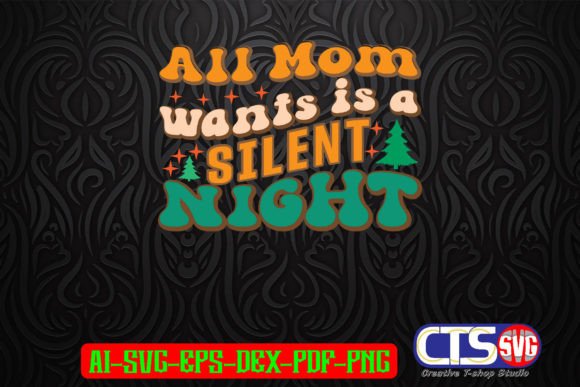
All Mom Wants Is a Silent Night – An Embroidery Design Review
I have looked at hundreds of holiday-themed embroidery designs over the years, and the phrase All Mom Wants is a Silent Night stopped me immediately. It is not just another cheerful Christmas slogan. It carries a quiet, knowing humor that resonates with anyone who has ever managed a household during the holidays. As a designer who stitches samples, tests on real products, and thinks about how a finished piece will actually sell, I wanted to sit down with this design and evaluate it from every practical angle.
The first impression is warmth with a wink. The typography and composition suggest a design that feels personal, slightly nostalgic, and deeply relatable. I can picture a mom unwrapping a tote bag or a pillow cover with this stitched across the front and laughing before she even says thank you. That emotional connection is exactly what separates a forgettable design from one that moves off the shelf or out of an Etsy shop.
The Mood and Visual Personality of the Design
When I evaluate a design like All Mom Wants is a Silent Night, I pay attention to the feeling it creates before I even think about stitch types or stabilizer. This one lands in a sweet spot between playful and sincere. It does not rely on cartoonish elements or overly ornate flourishes. The strength comes from the message itself, and that makes it incredibly versatile. It could work on a rustic kitchen towel, a cozy sweatshirt, a baby onesie, a canvas tote, or even a simple embroidered patch. The design carries enough personality to stand alone, which is a quality I always look for when selecting artwork for client projects or small shop merchandise.
The layout feels intentional. The words likely sit in a balanced arrangement that reads clearly at a glance. I appreciate designs that do not fight for attention with unnecessary decorative clutter. When too many elements compete, the embroidery becomes muddy, especially on textured fabrics or smaller hoops. A clean, message-driven design like this one gives me confidence before I even run the first stitch-out.
Where This Design Belongs in Real Projects
I mentally rotate every design through a list of products I have made or seen succeed in the handmade market. With All Mom Wants is a Silent Night, the list came quickly. The first place I would test it is on a natural cotton tote bag. A design like this, stitched in a soft cream or muted gold thread on a charcoal or olive canvas, would look effortlessly boutique-worthy. It is the kind of tote someone carries to the grocery store, the library, or a holiday market, and it starts conversations.
My next thought was a slouchy crewneck sweatshirt. The relaxed fit and soft fabric would complement the design's tone perfectly. I would place it on the front left chest for a subtle, wearable look, or scale it larger across the center back for a bolder statement. Either way, the message lands. I also see strong potential for a linen pillow cover, a cozy accent piece that a customer might buy as a gift for a sister, a friend, or themselves. The design does not need to shout. It simply connects.
For crafters who focus on baby items, this design could work beautifully on a soft baby blanket or a nursery wall hanging. New moms live in that exact tension between cherishing the season and craving a moment of quiet. The humor lands gently, and the product becomes both meaningful and marketable. I have learned that the best-selling handmade items are the ones that feel like someone truly understands the recipient. This design does that.
Practical Stitching Considerations
No matter how charming a design looks on screen, the embroidery machine tells the real story. I always approach a new design by thinking through how it will stitch on different fabrics and what adjustments might be necessary. With All Mom Wants is a Silent Night, the lettering is the critical element. If the text includes delicate serifs or thin connecting strokes, I need to be cautious about stitch density and fabric choice. Small details can close up on plush fabrics like fleece or French terry. I would test the design on a smooth cotton first, then move to a looped terry towel to see how the lettering holds up.
Thread color selection matters enormously here. I would test the design in a few color combinations before committing to a production run. A warm off-white on a deep navy background feels classic and clean. A metallic gold thread on a natural linen brings a subtle holiday elegance without being flashy. For darker fabrics, I always check whether the design maintains enough contrast. A soft gray thread on a black sweatshirt might look beautiful in a mockup but disappear under real lighting. I would rather test once and know than stitch a dozen units and regret it.
Stabilizer choice is another non-negotiable. For a design with text, I typically use a medium-weight cutaway stabilizer on knit fabrics to prevent shifting and distortion. On woven fabrics like a tea towel or a canvas tote, a tear-away stabilizer can work well if the stitch density is not too high. I always recommend testing the design on a scrap of the actual fabric before stitching on the final product. That extra step has saved me from ruined blanks and frustrated customers more times than I can count.
How the Design Affects Product Value and Customer Perception
When I sell a finished piece, I am not just selling thread on fabric. I am selling an experience, a feeling, a moment of recognition. A design like All Mom Wants is a Silent Night adds perceived value because it speaks directly to a specific experience. That specificity builds trust. A customer browsing a craft fair booth or scrolling through Etsy listings is more likely to stop and click when the message feels personal and genuine. The design does not try to appeal to everyone, and that is precisely why it appeals so strongly to the right audience.
From a branding perspective, this design would fit well into a shop that focuses on modern, relatable, slightly humorous gift items. It pairs well with other mom-themed, holiday, or self-care products. A cohesive product line built around similar sentiments can strengthen a brand identity and encourage repeat purchases. I think about this constantly when I evaluate new designs. It is not just about whether I like the artwork. It is about whether the artwork helps me build a collection that makes sense to my customers.
Sizing, Hoop Restrictions, and Placement Challenges
I do not have exact hoop size specifications for this design, so I always recommend checking the file details before purchasing. The design's complexity will determine how small it can be stitched without losing clarity. If the lettering includes fine details, an overly small version might become illegible. I would not attempt to stitch this at a tiny size on a curved surface like a baseball cap brim unless the design has been specifically digitized for that purpose. Caps are unforgiving. The fabric curves, the stabilizer needs to be precise, and registration errors become obvious quickly.
For products like baby onesies, I would position the design carefully to avoid the snaps and stretch areas. A small to medium-sized version on the chest or across the back yoke can work well. On an apron, I would place it higher on the bib to keep it visible and avoid the waist ties. These placement decisions might seem minor, but they directly affect how professional the finished product looks and how comfortable it is to wear or use.
Testing in Black and White and on Different Fabrics
One of my favorite pre-production tests is to convert a design mockup to black and white. This strips away the distraction of color and reveals whether the composition holds its own. A design that relies too heavily on color contrast might fall flat when stitched in a single thread color. I suspect All Mom Wants is a Silent Night would pass this test well because the strength is in the text and layout, not in chromatic effects. That versatility makes it a safer choice for single-color embroidery projects, which are often more cost-effective and faster to produce.
I also test across fabric types. A design that looks crisp on a smooth woven cotton might look soft and slightly blurred on a textured linen. That is not necessarily a flaw. The softer look can be beautiful in its own way, lending a vintage, lived-in feel. The key is knowing what result you want before you start stitching. I appreciate designs that give me room to interpret them across different materials without losing their essential character.
Licensing, Commercial Use, and File Format Awareness
The product description notes that All Mom Wants is a Silent Night is an instant download cutting file compatible with various cutting software machines. This suggests the file is likely intended for use with cutting machines, but as an embroidery designer, I always check whether the design is also suitable for embroidery digitization or if it requires conversion. If I am purchasing a cutting file to use as a base for embroidery digitizing, I need to confirm that the license allows derivative work for commercial embroidery projects. I never assume. I check the terms, read the shop policies, and reach out to the seller if anything is unclear.
For those who plan to sell finished products featuring this design, the commercial license is a critical detail. A design that brings in strong sales can quickly become a shop staple, and the last thing any small business owner wants is a licensing issue down the road. I always keep records of my purchased designs and their permitted uses. It is a simple habit that protects my business and respects the original designer's work.
Giftability and Seasonal Selling Potential
Holiday merchandise has a limited window, but the right design can sell steadily for weeks leading up to Christmas and even beyond. I see All Mom Wants is a Silent Night as a strong seasonal performer that could also transcend the holiday category. The sentiment resonates year-round for anyone who understands the quiet exhaustion and deep love of motherhood. A pillow cover or a tote bag with this design does not need to be packed away with the Christmas decorations. It can live in a reading nook, a home office, or a nursery all year long.
For gift buyers, this design solves a common problem. It is specific enough to feel thoughtful but universal enough to suit many different moms. A customer shopping for a mother-in-law, a sister, a best friend, or a coworker could all find relevance in the message. That broad appeal within a defined niche is exactly what I look for when selecting designs for my holiday product lineup.
Final Thoughts from a Working Designer's Perspective
After evaluating All Mom Wants is a Silent Night from every angle that matters to my stitching practice, I find it to be a genuinely useful addition to a maker's holiday collection. The design offers emotional resonance, visual clarity, and flexible application across a wide range of products. It is not a complicated or overly technical piece, and that simplicity is its greatest asset. It stitches cleanly, reads instantly, and connects with the customer on a human level.
I would confidently recommend this design to Etsy sellers, craft fair vendors, custom apparel decorators, and anyone building a handmade gift business. Test it on your chosen fabric, dial in your thread colors, and use the right stabilizer for the material. Once you see it stitched out on a finished product, I think you will understand exactly why I believe in designs that say something real. All Mom Wants is a Silent Night says it, and it says it well.