T-Ball Mom Baseball T-Shirt Design: A Real-Use Review
As someone who has spent years transforming digital artwork into stitched, wearable products, I know the gap between a pretty graphic on a screen and a design that actually works under the needle. When I first saw the T-Ball Mom Baseball T Shirt Design, I immediately recognized it as one of those print templates that could cross over into embroidery if you treat it with the right respect. It’s sold as a printable sublimation design, but I wanted to look at it through the lens of a maker who plans to stitch it onto a tote bag, a sweatshirt, or a patch—because that’s where many of us earn our living.
This review isn’t about listing specifications. It’s about what happens when you load a graphic like this into your digitizing software, start picking thread colors, and wonder how it’ll look after a dozen wash cycles. I’ll share what I spotted, what I’d test, and where this design could genuinely shine for embroidery business owners, Etsy sellers, crafters, and handmade product creators.
First Impressions: A Playful, Familiar Theme with Heart
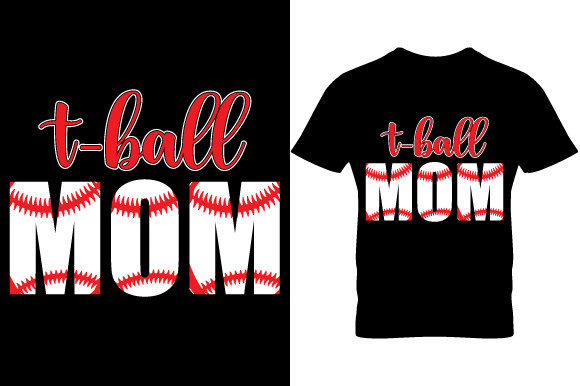
The T-Ball Mom Baseball T Shirt Design leans into a theme that never goes out of style—youth baseball and the mothers who support it. The composition feels cheerful and approachable, with a mix of baseball imagery and typography that reads like a proud team mom’s rally cry. It’s not stiff or overly formal; the lettering has a hand-drawn, script-like quality that softens the athletic theme, giving it a giftable, boutique feel.
When I evaluate a design for embroidery, I look at line weight, open spaces, and how shapes will hold up once they’re filled with thread. This graphic has a moderate level of detail. The baseball and bat elements are recognizable without being overly fussy, and the text is the star of the show. That’s a good sign—text-heavy designs often sell well for personalized gifts, and this one strikes a balance between readable and decorative.
I can easily picture this on a tote bag for a team mom who carries snacks and gear, or on a cozy sweatshirt worn to Saturday morning games. The mood is warm, supportive, and a little nostalgic, which is exactly what buyers of handmade sports-themed products are looking for.
How the Design Translates to Stitch
Even though this is a Print Templates product and a Graphics asset at its core, its visual structure makes it a strong candidate for digitizing into an embroidery file. The shapes are distinct enough that a skilled digitizer can assign satin stitches to the lettering and fill stitches to the larger areas, while using running stitches for delicate outlines. The baseball seams, for instance, could become a wonderful satin-stitch detail that adds texture without overwhelming the piece.
One thing I always check is whether the design has tiny floating elements or extremely thin lines that might disappear when stitched. In this case, the baseball stitching and the bat’s silhouette appear to have enough weight to translate well at a reasonable size. If the original graphic has any gradients or soft shadows—common in sublimation art—I’d simplify those into solid, embroidery-friendly shapes before digitizing. That’s a step many small shop owners overlook, and it can make or break the final stitch-out.
Thread color selection is crucial. I’d reach for a rich red, a clean white, and a deep navy or royal blue for a classic baseball palette. For a more feminine, boutique look, you could swap in soft pinks and mint greens, but I’d keep the contrast high so the text pops on whatever fabric you choose. The T-Ball Mom Baseball T Shirt Design naturally lends itself to a two- or three-color thread scheme, which keeps production simple and cost-effective.
My Real-World Test: A Custom Tote Bag for a Team Mom
Last month, a client asked me to create a personalized embroidered tote bag for a T-ball mom who volunteers as the team’s snack coordinator. I immediately thought of this design. I downloaded the artwork, opened it in my digitizing software, and began mapping out the stitch order. The tote was a sturdy canvas—ideal for a design with moderate density—and I planned to use a medium-weight cutaway stabilizer to prevent stretching.
After digitizing the lettering as a satin stitch with a slight underlay, I ran a test stitch-out on a scrap piece of similar fabric. The text came out crisp, and the baseball bat held its shape without any puckering. I adjusted the stitch angle slightly to avoid long, loose threads on the bat’s curve, and I added a narrow satin-stitch outline around the entire design to give it a polished, patch-like edge. The result was a tote bag that looked like a premium boutique product, not a quick craft fair item.
That experience confirmed what I suspected: this design, when properly digitized, can produce a stitch-out that feels professional, durable, and emotionally resonant. The client’s reaction was immediate—she loved the personal touch, and the gift ended up being a conversation starter at the next game.
Where This Design Shines Brightest
Based on my testing and years of working with similar themes, the T-Ball Mom Baseball T Shirt Design fits into several product categories beautifully. Here’s a list of where I’d confidently use it:
- Custom tote bags for team moms, coaches, or gift baskets
- Sweatshirts and hoodies for chilly morning games
- Baseball caps with a curved front panel—digitized with care for the small footprint
- Embroidered patches that can be ironed or sewn onto jackets and backpacks
- Aprons for team snack stands or baseball-themed barbecues
- Pillow covers for a sports-themed bedroom or nursery
- Tea towels as a fun, personal gift for a T-ball-loving family
- Baby onesies or tiny t-shirts for the littlest fans
- Blankets as a keepsake for a season-ending celebration
Each of these products appeals to a different buyer, but the design’s sentiment stays the same. It’s that universal “proud mom” message that performs well on Etsy, at craft fairs, and in boutique shops.
Critical Details to Watch Before You Stitch
I’ve learned the hard way that even the most charming design can cause headaches if you ignore a few practical checkpoints. Because the T-Ball Mom Baseball T Shirt Design arrives as a graphic, not a pre-digitized embroidery file, you’ll need to handle the conversion yourself or hire a digitizer. Before you commit to a production run, do these things:
- Test on scrap fabric that matches your final product’s weight and weave. Cotton canvas, fleece, and jersey all behave differently.
- Check thread color contrast on both light and dark backgrounds. What looks vibrant on white may wash out on navy or charcoal.
- Review stitch density carefully. Too dense, and you’ll get puckering on thin fabrics; too sparse, and the design looks flimsy.
- Confirm the minimum size. I wouldn’t stitch this smaller than about 3.5 inches wide for the text to remain legible, especially on textured fabrics.
- Simplify any fine details that might not translate to thread. The original graphic may have shading that needs to be removed for a clean embroidery result.
- Inspect the lettering for thin connectors or loops that could close up under dense stitching. Adjust the digitized path if needed.
- Test in black and white to see how the design reads without color. This helps you spot contrast issues early.
- Use the right stabilizer for your fabric. A cutaway stabilizer gives lasting support on stretchy garments, while a tear-away works for stable woven tote bags.
These steps take a little extra time, but they protect your handmade product’s reputation. A customer who receives a crisp, long-lasting embroidery will come back—and tell their friends.
Color and Fabric Choices That Make It Pop
The baseball theme gives you a lot of creative freedom, but I’ve found that some combinations really elevate the T-Ball Mom Baseball T Shirt Design. For a classic look, pair red and white thread on a navy blue sweatshirt. If you want a softer, more modern feel, try blush pink and white on a heather gray tote. The design’s open shapes handle metallic threads surprisingly well, too—a gold or silver bat outline adds a subtle sparkle that works for end-of-season awards or holiday gifts.
Fabric texture matters. On a smooth canvas tote, the stitches lay flat and look sharp. On a plush fleece, the design will have a slightly softer, more dimensional appearance, which can look cozy and custom. Avoid extremely thin or stretchy fabrics unless you’re confident in your hooping and stabilization technique—lightweight rayon knits, for example, can distort the baseball shape if you’re not careful.
If you’re using the design on a dark fabric, consider adding a white or light underlay beneath the colored stitches to keep them vibrant. This is especially important for the red thread, which can lose its brightness against a black background.
Sizing and Hoop Considerations
One of the first questions I ask when reviewing a design is, “What hoop size does it need?” With the T-Ball Mom Baseball T Shirt Design, the answer depends on how you digitize it. The original graphic is a print template, so you can scale it to fit your hoop—but be mindful of the text’s readability. I’d aim for a design width of at least 4 inches for a standard t-shirt or tote bag, which fits comfortably in a 5x7 hoop. For a baseball cap, you’ll need to shrink it down to around 2.5 inches wide, which is tight but doable if you simplify the bat detail and increase the lettering size slightly.
Larger projects, like the back of a sweatshirt or a blanket, can handle the design at 6 or 7 inches wide, giving the fill stitches room to breathe and the satin-stitch lettering a more luxurious look. Always measure your hoop’s available stitching area and leave a margin for alignment, especially on curved surfaces like caps.
The Commercial Angle: Selling Products with This Design
If you’re an Etsy seller, a craft fair vendor, or a small shop owner, the T-Ball Mom Baseball T Shirt Design can become a reliable product in your lineup. The “T-ball mom” niche is specific enough to attract passionate buyers, yet broad enough to sell year-round, peaking during spring sports seasons and around Mother’s Day. I’ve seen similar designs sell well as personalized embroidered items, where you add a child’s name or team number to the base design.
Because this is a graphics asset, you’ll need to check the licensing terms with the seller before you offer embroidered products. Some print template licenses allow commercial use on physical items, while others restrict resale of the digital file. Always confirm what’s allowed, especially if you plan to sell sublimated shirts or mugs alongside embroidered versions. The listing mentions that the design contains formats such as “E,” which likely refers to vectors like EPS—these are ideal for digitizing because they scale cleanly, but you should still verify with the seller that embroidery digitization is permitted.
For digital product sellers, this design can also serve as a printable mockup so you can show customers how the finished embroidery might look on a t-shirt or sweatshirt before you stitch a single thread. That kind of preview builds trust and increases buyer engagement.
Final Thoughts from the Embroidery Bench
After looking at the T-Ball Mom Baseball T Shirt Design from every angle a working embroiderer would care about, I’m impressed by its potential. It’s not a ready-to-load embroidery file, but the artwork has a strong, clear composition that translates well into stitch-friendly shapes. With careful digitizing, smart thread choices, and a few test runs, this design can become a standout product in your handmade lineup.
The joy it brings to a team mom who receives a custom-stitched gift is exactly the kind of thing that keeps my machine running. Whether you’re filling an Etsy order, preparing for a craft fair, or making something special for the T-ball mom in your life, this design gives you a versatile, heartfelt foundation. Just remember to digitize thoughtfully, test thoroughly, and always keep your customer’s experience in mind. That’s the real secret to turning a printable template into a stitched treasure.