Rollin with My Homies Mom Embroidery Design Review
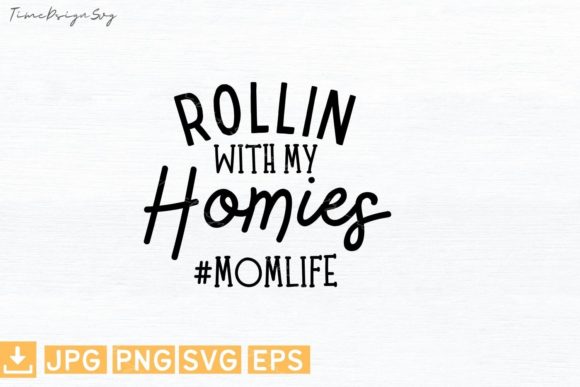
I opened the file for Rollin with My Homies Mom expecting something playful, and honestly, it delivers exactly the kind of cheeky, relaxed energy that sells well in handmade markets right now. The design has a casual, confident vibe — it feels like a design made for a mom who doesn't take herself too seriously, someone who embraces the chaos of motherhood with humor and a little bit of attitude. Right away, I could picture this stitched onto a slouchy sweatshirt, a canvas tote bag, or even a kitchen towel hanging in a busy household. That immediate visual connection is something I always look for when evaluating whether a digital embroidery file will actually move off the shelf or get clicked on in an Etsy listing.
First Impressions and the Mood It Creates
The personality of Rollin with My Homies Mom sits in that sweet spot between nostalgic and modern. The lettering style, the likely retro-inspired layout, and the easygoing rhythm of the phrase all point toward a design that feels warm, relatable, and slightly humorous. I've seen plenty of mom-themed embroidery designs that lean too hard into sentimentality or try too hard to be trendy, but this one feels like a genuine inside joke between friends. That authenticity matters. When a customer scrolls through dozens of embroidered sweatshirt options, the ones that spark a real emotional reaction are the ones that sell. This design has that spark.
From a purely visual standpoint, the shape and layout will determine how well it reads on different products. If the text is arranged in a stacked or arched format, it will suit a center-chest placement on t-shirts and sweatshirts beautifully. If it's more horizontal, tote bags and aprons become natural homes. I always recommend testing the digital mockup on multiple product templates before committing to thread — a design that looks brilliant on a flat screen can feel unbalanced once it's hooped and stitched onto a curved garment.
Where This Design Actually Belongs
When I think about Rollin with My Homies Mom in real embroidery projects, the first product that comes to mind is a relaxed-fit crewneck sweatshirt. The message matches the comfort factor perfectly. I can imagine a customer wearing it to school drop-off, coffee runs, or casually at home. It's the kind of design that works for custom apparel, handmade product lines, and personalized gift orders alike. A best friend buying this for another mom friend? That's a sale waiting to happen.
Beyond sweatshirts, I would confidently place this on:
- Canvas tote bags for grocery runs or beach days
- Kitchen towels as a humorous accent in a family home
- Aprons for the mom who loves to cook but keeps it real
- Pillow covers for a cozy, lived-in living room aesthetic
- Baseball caps for a subtle, playful statement piece
What makes this design versatile is the tone. It's not overly cutesy, so it won't feel out of place on products aimed at adults. It's not aggressive, so it fits comfortably in boutique product settings and craft fair products where approachability matters. I've learned over the years that humor-based designs often perform better on practical, everyday items than on formal or delicate pieces. People want to use them, not just display them.
Stitching Performance and Practical Considerations
Here's where experience really matters. A design can look fantastic as a digital file and still cause headaches once the machine embroidery design hits the hoop. With Rollin with My Homies Mom, the biggest factor will be lettering detail. If the text includes thin strokes, small counters, or tight curves, those areas need careful attention to stitch density and stabilizer choice. I always test lettering-heavy designs on a scrap of the actual fabric I plan to use. A smooth cotton canvas behaves differently than a stretchy French terry, and what looks crisp on one can turn into a puckered mess on the other.
For fabrics with texture — think waffle weave towels, slub cotton, or loosely knit sweaters — I would recommend a solid backing stabilizer and possibly a water-soluble topper to keep the satin stitch or fill stitch clean. Small lettering on a curved surface like a cap demands extra caution. The natural curve of a baseball cap can distort text alignment if the design isn't digitized with that shape in mind. I always test cap designs on a practice blank before stitching a finished product. A customer receiving crooked, uneven lettering on a cap will not return for a second purchase.
Fabric and Color Choices That Make or Break the Design
One of the first things I consider with any embroidery file is how it will behave on different fabric colors. Rollin with My Homies Mom likely uses a solid fill or satin stitch for the main lettering, which means contrast is everything. On a light oatmeal or cream sweatshirt, the design will pop beautifully. On a dark charcoal or black fabric, thread color selection becomes critical. I usually test thread colors against both light and dark backgrounds before committing to production. A design that works on white might disappear on navy if the thread choice lacks contrast.
Stretchy fabrics present another challenge. If you're planning to stitch this onto a thin t-shirt, a cut-away stabilizer is your best friend. Without it, the design can warp after the first wash, and customers notice. I've had too many early projects come back to haunt me because I skimped on stabilizer. For baby embroidery or holiday embroidery items that will be gifted and potentially washed frequently, durability matters. A clean, well-backed stitchout with proper tension will hold up through dozens of washes. A sloppy one will fray, loosen, and disappoint the buyer.
Real-Life Scenario: The Custom Tote Bag Order
Let me walk through a realistic use case. A customer messages my shop asking for a personalized tote bag with a funny mom design — something for her sister who just had her third baby and needs a laugh. I immediately think of Rollin with My Homies Mom. I prepare a digital mockup on a natural canvas tote, choose a warm, slightly faded thread color to match the relaxed vibe, and send the preview. The customer loves it. I stitch it out on a medium-weight canvas with a medium-weight cut-away stabilizer, and the result is clean, readable, and full of personality. The customer leaves a five-star review mentioning how her sister laughed out loud and uses the bag every day. That's the kind of finished product outcome that builds a craft business reputation.
This scenario repeats itself across different product types. A mom buying a matching sweatshirt for herself and her best friend. A boutique owner ordering a small batch of embroidered caps for a Mother's Day collection. An Etsy seller adding the design to a printable mockup listing to showcase embroidery options. In each case, the design's personality does the heavy lifting, but the stitching clarity and product value determine whether the customer comes back.
What to Watch Out For Before Stitching
I always tell newer embroidery designers and small shop product owners to test aggressively before offering a design to customers. With Rollin with My Homies Mom, here are the specific things I would check:
- Small detail visibility — if the lettering has any decorative flourishes, tiny dots, or thin connecting strokes, verify they read clearly at the intended size.
- Stitch density balance — overly dense satin stitches on lightweight fabric will cause puckering. Test on the actual product fabric.
- Hoop size compatibility — confirm the design fits your available hoop sizes. If it's too large for a standard 4x4 hoop, you'll need to plan for larger equipment or resize carefully.
- Dark fabric contrast — test the design on black, navy, and charcoal fabrics with different thread colors to find the best combination.
- Washing durability — stitch a sample, wash it three times, and check for thread loosening, fraying, or distortion.
These are not hypothetical concerns. I've ruined enough blanks and disappointed enough early customers to know that skipping these steps costs more than the time saved. A digital embroidery file is only as good as the final stitchout on the intended product.
Commercial Use and Licensing Awareness
Since the product description states these are digital files available for immediate download, and the included formats are SVG and EPS, this is clearly a Graphics asset intended for T-Shirt Designs and similar projects. For embroidery use, you'll need to convert or digitize the design into a format compatible with your embroidery machine. The provided files are vector graphics, which serve as excellent source material for digitizing, but they are not ready-to-stitch embroidery file formats. That's an important distinction. If you're offering commercial embroidery products, you'll need to handle the digitizing step yourself or work with a digitizer who can accurately translate the design.
Before selling finished items featuring this design, clarify the licensing terms. The product description doesn't specify commercial use permissions, so it's wise to reach out to the seller if you plan to use Rollin with My Homies Mom on products for sale in your Etsy seller shop, craft business, or boutique branding line. Some digital file sellers allow commercial use on physical products, others restrict it to personal projects only. Never assume. A copyright complaint can shut down a small shop faster than almost anything else.
How the Design Impacts Customer Trust and Brand Consistency
A design like Rollin with My Homies Mom carries a specific tone. If your brand identity is built around elegant, minimalist, high-end embroidery, this design might feel out of place. But if your shop voice is playful, relatable, and geared toward modern parents, this design reinforces that identity perfectly. Brand consistency matters. Customers who buy one humorous mom design from you will likely return for more if the style and quality remain consistent. Mixing wildly different aesthetics can confuse buyers and weaken your shop's visual identity.
The giftability factor here is high. This is a design that people will buy for someone else — a sister, a best friend, a coworker on maternity leave. When a customer gifts an embroidered item, they're essentially vouching for your product quality. If the stitching is clean, the fabric is comfortable, and the design brings a genuine smile, that gift recipient becomes a potential customer. Word-of-mouth referrals from satisfied gift recipients have been one of the most reliable growth drivers for my own embroidery work.
Final Practical Thoughts Before You Start Stitching
I've evaluated hundreds of embroidery project designs over the years, and Rollin with My Homies Mom lands in the category of designs that work because of their emotional appeal, not because of technical complexity. The design doesn't need to be intricate to be effective. It needs to be readable, well-placed, and stitched with care. The humor does the rest. For apparel decorators, handmade shop owners, and creative entrepreneurs looking to add a relatable mom-themed product to their line, this design is a solid candidate.
Test it on your chosen fabric, check the contrast, use the right stabilizer, and confirm your licensing. If all those boxes are checked, you'll have a product that resonates with customers and holds up to real-world use. That's the standard I hold for every design I stitch, and Rollin with My Homies Mom meets it with personality to spare.