Home School SVG: Livin' That Homeschool Mom Life Review
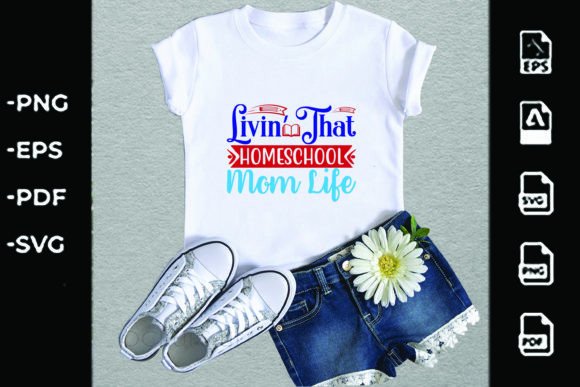
I opened the file folder for Home School Svg Design,livin' That Homes expecting another generic script design, but what I saw made me stop and think about how this would actually land on a finished product. The lettering carries a relaxed, confident rhythm—the kind that feels less like a mass-produced graphic and more like something a friend would hand-letter on a chalkboard. There is a casual warmth in the way livin' that homeschool mom life flows, and that tone matters more than most people realize when you are stitching it onto something someone will wear or display in their home.
First Look at the Design Personality
The mood of this design is unapologetically proud without being loud. The shape feels organic, with a hand-drawn quality that softens the edges. The typography mix gives it movement—there is a gentle contrast between the relaxed script and the grounded supporting text. This is not a rigid, perfectly symmetrical layout, and that is exactly why it works. When I evaluate a design for embroidery, I look for whether the personality survives the translation from screen to thread. Some designs lose their soul when they get digitized. Home School Svg Design,livin' That Homes has enough character in its letterforms and spacing to hold up well, especially on medium to large placements where the details can breathe.
Where This Design Naturally Belongs
I kept picturing this on a canvas tote bag. The kind a homeschool mom carries to the library with a stack of books, a planner, and a water bottle. The phrase feels like a quiet badge of identity—something that sparks a knowing smile from another parent who gets it. It also belongs on a cozy crewneck sweatshirt, the kind you throw on during morning read-aloud time. A design like this does not scream for attention. It leans into relatability, and that is a powerful thing for a handmade product or a small shop item. If you are an Etsy seller or a craft business owner, you know that emotional connection drives the purchase. This design taps into that.
Real Project Test: A Custom Embroidered Tote
I decided to mentally run this through a real project scenario—a custom embroidered tote bag for a client who wanted a gift for her sister, a first-year homeschool mom. I chose a medium-weight cotton canvas in natural beige. The design was sized to about six inches wide, centered on the front panel. I used a cutaway stabilizer because the fabric has a loose weave and would need the support through washing. Thread colors were kept simple: a deep charcoal for the main lettering and a muted mustard accent for the smaller words. The result, even in my mind's eye, looked like something you would find in a boutique—understated, personal, and well-made.
What I appreciated most during this exercise was how the design translated at that scale. The open counters in the letters did not close up. The spacing between words remained legible. The slight irregularities in the hand-drawn style felt intentional, not sloppy. For a machine embroidery design like this, stitch direction matters. The flowing script would benefit from a satin stitch approach with careful angle adjustments to keep the sheen consistent. The supporting text could use a fill stitch with a light density to avoid puckering on the canvas.
How It Performs on Different Products
I see Home School Svg Design,livin' That Homes working across a range of products, but not all of them equally. Let me break down what I would confidently recommend and what I would approach with caution.
Strong Product Matches
- Sweatshirts and hoodies: The design has enough presence to hold its own on a chest or back placement. The relaxed vibe pairs perfectly with fleece texture.
- Tote bags: As mentioned, this is a natural fit. The rectangular shape of the design sits well on a vertical bag panel.
- Pillow covers: A linen or cotton-linen blend pillow cover with this embroidered in a tonal thread would make a lovely gift for a homeschool room.
- Aprons: A half-apron with this stitched near the hem adds personality without being overpowering.
- Tea towels: Flour sack towels with this design in a simple running stitch or light satin stitch would sell well at craft fairs.
Where to Use Extra Caution
- Small hoop sizes: Shrinking this design below four inches wide risks losing the finer details in the lettering. The thin strokes in the script could become fragile or break under tension.
- Caps and curved surfaces: The horizontal layout does not naturally conform to a cap's curve. You would need to reshape or arc the design, which could alter its character.
- Stretchy fabrics: On thin t-shirts or performance wear, the design could distort if not properly stabilized. A topper would help, but the lettering still needs to be tested for recovery after stretch.
- Dark fabrics: Color contrast is critical here. Light thread on dark fabric works, but you need to test the thread weight. Thin lettering on a dark background can look anemic if the stitch density is too low.
Stitching Clarity and Visual Appeal
One thing I always check when reviewing a design is whether the visual hierarchy holds up after stitching. The eye should know where to land first. With this design, the phrase livin' that homeschool mom life naturally draws attention. The word livin' has an energetic, almost handwritten bounce that sets the tone. The supporting words frame it without competing. This hierarchy is well-balanced, and that matters for how a finished product reads from a distance. On a tote bag or a sweatshirt, someone across the room should be able to grasp the message in a second or two. This design achieves that.
For handmade product presentation, the design also photographs well. The transparent PNG in the ZIP file makes it easy to create a printable mockup for an Etsy listing or a product preview. Sellers who use digital mockups before stitching will find the file clean and easy to work with. The included EPS and SVG formats give flexibility for those who want to adjust colors or scale before digitizing.
Customer Trust and Buyer Engagement
When a customer sees this design on a product, they are not just buying a graphic. They are buying a feeling of belonging. The homeschool community is tight-knit, and phrases like this one act as a quiet signal. That sense of recognition builds trust between the seller and the buyer. A well-stitched version of this design says, I understand your world. That is the kind of connection that turns a one-time buyer into a repeat customer. For a small shop product or a craft business, that is invaluable.
From a branding perspective, this design also fits into a larger product line. You could pair it with complementary designs—book-themed graphics, apple motifs, pencil illustrations—to create a cohesive homeschool collection. Consistency across products strengthens your brand and makes your shop look intentional, not scattered.
Practical Designer Notes Before You Stitch
I have learned through plenty of trial and error that even a beautiful design needs a practical checklist before it hits the hoop. Here is what I would do before using Home School Svg Design,livin' That Homes on a real project.
- Test on scrap fabric first. Do not let your first stitch be on the final product. Use a similar fabric weight and texture to see how the design behaves.
- Check thread color contrast. Hold the thread spool against the fabric under natural light. What looks good under a craft lamp can look different in daylight.
- Review stitch density. If the design feels too dense, it can cause puckering. If it is too light, the fabric shows through and the design looks cheap.
- Confirm hoop size. The design must fit comfortably within your hoop with at least a half-inch margin on all sides for proper stabilization.
- Inspect small details. Zoom in on the thin strokes and the connections between letters. Make sure the digitized version preserves these.
- Test in black and white. Convert a mockup to grayscale. If the design still reads well, it will work on a variety of fabric colors.
- Use proper stabilizer. Cutaway for knits, tear-away for wovens, and always consider a topper for textured or plush fabrics.
- Check licensing. Before selling finished items or digital products, confirm what the license allows. The product description lists the file types but does not explicitly state commercial use terms, so verify that independently.
The Emotional Pull of a Simple Phrase
There is a reason designs like this one sell. They are not just decorative. They are affirming. A mom who sees livin' that homeschool mom life on a tote bag or a sweatshirt feels seen. She feels like someone put words to her daily reality. That emotional pull is what makes a product giftable. A friend buys it for a friend. A husband buys it for his wife. A mom buys it for herself because she finally feels proud of the life she is building. As a designer, I pay attention to that emotional weight. It tells me the design has staying power beyond a trend.
Final Thoughts on the Design File
The ZIP file includes EPS, PNG, SVG, and PDF formats, which covers the essentials for most creative workflows. The transparent PNG is useful for mockups and previews. The SVG works well for cutting machines and for vector editing before digitizing. The EPS is a bonus for those who prefer working in Illustrator. The PDF is handy for quick reference or printing. As a reviewer, I appreciate when a product delivers clean, organized files without unnecessary clutter. This one does.
For embroidery designers, apparel decorators, and digital product sellers, the real question is always whether a design will look as good stitched as it does on screen. In the case of Home School Svg Design,livin' That Homes, I believe it will—with the right digitizing, the right stabilizer, and the right placement. It is a design that carries warmth, identity, and a subtle sense of pride. Those qualities translate beautifully into thread.
If you are building a product line around homeschool themes, adding this design to your collection is a solid move. It works for custom apparel, personalized gifts, embroidered patches, tote bag designs, and boutique products alike. Just remember to test thoroughly, choose your fabrics wisely, and let the design's easygoing personality guide your thread choices. When you get it right, the finished product will not just look good—it will feel like it belongs to someone.