Border Collie Mom Design: A Designer’s Embroidery Evaluation
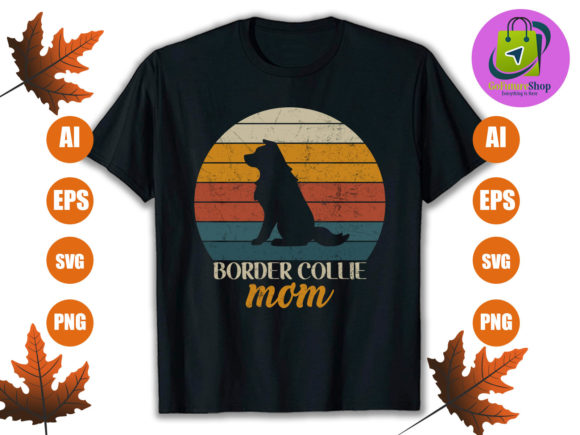
When a client asked me to create a custom embroidered tote bag for a dog show gift, I knew I needed a design that felt both personal and polished. The “Border Collie Mom” graphic caught my eye immediately. It’s not just a title; it’s a badge of identity. The moment I saw the clean lines and the proud, centered typography, I could picture it stitched onto a sturdy canvas tote, maybe with a subtle paw print motif nearby. This design, while delivered as a vector and PNG file, holds real potential for embroidery, but as always, the devil is in the details. I’m going to walk you through how I evaluate a graphic like this for real-world stitching, because not every pretty printable translates well under thread.
First Impressions and Emotional Pull
The mood of this design is warm, loyal, and a little quirky, just like the breed itself. The phrase “Border Collie Mom” immediately connects with a very specific pet owner, someone who loves the intelligence and energy of this breed. The composition seems to rely on a strong, bold text layout, probably with a friendly, slightly playful font. There’s no clutter, and that’s a huge plus for embroidery. The visual personality is straightforward: it’s a statement piece. It doesn’t need extra illustration because the words themselves carry the emotional weight. A design like this shines on personalized gifts, and I can already imagine the smile when someone pulls a zipper pouch with this message out of their bag. For a maker, that emotional hook is priceless. It turns a simple product into a keepsake.
Translating a Graphic Into Stitches
The product description lists AI, EPS, SVG, and PNG files. That’s a typical graphic design bundle—great for printable mockups, sublimation, or direct-to-garment printing. But as an embroidery designer, I’m looking at the digital embroidery file potential, not the ready-to-stitch format. Since no machine embroidery file (like PES, DST, or EXP) is included, I’d need to digitize the artwork myself or send it to a skilled digitizer. The clean vector lines are a gift here. With SVG or EPS, I can easily import the design into embroidery software, trace the text, and assign stitch types. But I always remind fellow crafters: vector art is not a stitch file. You still need to manually set stitch direction, density, and underlay for a professional result.
What Works Well for Embroidery
The simplicity of “Border Collie Mom” is its strongest asset. Designs with a single block of text typically degrade less when scaled down, and the absence of tiny decorative elements reduces the risk of thread breaks or blurry details. I can see this working beautifully as a satin stitch or even a bold fill stitch on a medium-weight fabric. The lettering appears to have enough thickness to hold up well in a 4×4 inch hoop, which is the holy grail for small business owners. For a tote bag, I’d probably enlarge it to fill a 5×7 hoop, and the vector source means I can scale without losing quality. The RGB color mode mentioned in the description is fine for digital, but I’ll need to convert that to a physical thread palette. I’d test a few thread brands to match the exact shade of black, charcoal, or maybe a rich burgundy if the client wants a softer look.
Real-World Project Scenarios
I don’t just look at a design in isolation. I run through the products I’d actually make. Here’s where “Border Collie Mom” fits naturally:
- Custom totes and canvas bags: A classic farmer’s market carryall with this design centered on the front pocket. The thickness of canvas handles dense stitching well.
- Sweatshirt and hoodie embellishments: A small chest embroidery on a cozy fleece pullover. The clean text sits flat and looks professional.
- Embroidered patches: Create a sew-on or iron-on patch with a merrowed edge. This design is perfect for a patch because it’s compact and instantly recognizable.
- Pillow covers and home decor: A gentle scatter of embroidered text on a cushion for a dog lover’s living room. The design’s simplicity keeps it elegant.
- Kitchen tea towels: A crisp linen towel with a centered “Border Collie Mom” in a subtle color. I’d use a soft, low-sheen thread to avoid stiffness.
- Boutique baby items: A tiny onesie or bib with the design resized to a 2×2 inch area. The text must be legible, so I’d test carefully.
For Etsy sellers and craft fair vendors, this design is a low-risk, high-appeal addition. It’s specific enough to attract a niche but broad enough to have a steady demand. I can already picture a product listing titled “Personalized Border Collie Mom Tote Bag” with a photo of the finished embroidery in natural light.
Where You Need to Apply Extra Caution
Not every fabric and hoop size will treat this design kindly. I learned early on that text-heavy designs need a careful eye. Here’s what I’d watch out for:
- Small hoops under 4×4 inches: Scaling down the text too much can close up letter loops, especially in the “e” and “a” characters. I’d avoid using this on a 2×2 inch hat patch unless I digitize a simplified version.
- Stretchy or thin fabrics: Jersey knits and lightweight cotton can pucker around dense text. A good cutaway stabilizer is non-negotiable, and I’d also baste the fabric to a tear-away backing for extra support.
- Dark or heavily textured fabrics: The design’s contrast relies on thread color. If I stitch black thread on a dark navy sweatshirt, the message disappears. I’d test on a scrap and maybe add a light underlay to prevent the fabric from showing through.
- Curved surfaces like caps: The curved bill of a baseball cap can distort straight text. I’d need to adjust the digitizing to arc the letters slightly, which isn’t always possible with a pre-made graphic. This design works best on flat or gently curved surfaces.
- Frequent washing: If the item will be tossed in the laundry often, like a kitchen towel, I’d use polyester thread and a dense but not overly heavy stitch to avoid thread wear or snagging. A running stitch outline around the text can also protect the edges.
I’ve seen too many beautifully digitized designs fail on a garment because the fabric wasn’t right. A quick test on a scrap of the same material is the best insurance you can buy.
Commercial and Branding Considerations
Using this design for a small business or handmade shop means thinking beyond just one finished product. The vector files give you enormous flexibility for mockups, product previews, and marketing materials. I can place the SVG on a digital mockup of a tote bag, a mug, or a pillow, and instantly have a clean listing photo. That’s a huge time-saver for Etsy sellers. But you must check the license. The product description doesn’t mention commercial use terms, so I’d contact the seller before selling finished items with this design. Without explicit permission, you risk a copyright complaint. For digital embroidery design resellers, you can’t just resell the raw graphic files as embroidery files unless you’ve significantly transformed them and have the license to do so. I always err on the side of caution and get written confirmation.
From a branding perspective, “Border Collie Mom” aligns with a warm, handmade aesthetic. It doesn’t scream mass-produced. It feels like something you’d find at a small boutique, which increases perceived value. Customers are more likely to trust a product that looks intentionally crafted rather than stamped out. This design helps build that trust.
Practical Designer Notes for a Flawless Finish
Before I commit any design to a final product, I run through a mental checklist. These are the steps I’d take with “Border Collie Mom” to ensure it looks professional and lasts:
- Test on scrap fabric: Always. Use the same fabric and stabilizer combination you plan for the final piece. I’d stitch a sample on canvas, fleece, and linen to see how the texture affects the text.
- Check thread color contrast: Hold the thread spool against the fabric under natural light. I’d also test on black and white backgrounds, because customers might request either. The design should pop on both.
- Review stitch density: If I digitize the vector file, I’ll keep the density moderate. Too dense and you risk thread breaks and a stiff feel; too sparse and the text looks wispy. A satin stitch around 0.4mm width works well for medium letters.
- Confirm hoop size: Measure the design’s final dimensions before stitching. I’d probably aim for 3.5×2 inches for a chest logo, and 5×3 inches for a tote bag. Always leave a margin for the hoop’s boundary.
- Inspect small details: Zoom in on the letters. The “B” and “C” need clean, sharp corners. I’d add a small underlay stitch to keep the edges from sinking into plush fabric.
- Test in black and white mockups: A quick greyscale view reveals if the design relies too heavily on color. Since this is text-based, it’s inherently readable, but I still check for uneven thickness.
- Use proper stabilizer: For a tote, I’d use a medium-weight cutaway. For a t-shirt, a no-show mesh stabilizer prevents the design from feeling like a shield. The wrong stabilizer is often the hidden culprit behind a bad review.
- Check licensing: I’d revisit the store’s policies to see if the files are intended for personal use only, commercial physical products, or digital resale. Transparency here protects your shop and reputation.
Why This Design Deserves a Spot in Your Embroidery Project Queue
After all the analysis, I keep coming back to the emotional connection. “Border Collie Mom” isn’t just a graphic; it’s a conversation starter. It’s the kind of design that makes a handmade product feel personal without being overly complicated to stitch. For a craft business, it’s a smart addition to your spring and summer collections, especially around dog shows, adoption events, or Mother’s Day. The versatility across totes, apparel, and home goods means you can offer a cohesive product line without redesigning the wheel. And because the source files are vector-based, you can adapt them for other crafts beyond embroidery, such as screen printing or vinyl decals, giving you more value from a single purchase.
I’ve tested similar minimalist text designs in the past, and the ones that sell best are the ones that speak directly to a passion. Dog mom designs are a perennial favorite. The key is to execute them with care. A sloppy stitch job on a phrase like this will get noticed because the lettering is the entire focus. If you take the time to digitize with precision, test on multiple substrates, and package the finished product beautifully, you’ll have a loyal customer base. I’m planning to run a batch of these totes next week, and I’ll be using a soft charcoal thread on natural canvas with a subtle floral lining—because the design deserves that little extra touch.
Ultimately, “Border Collie Mom” is a graphics-based asset that can elevate your T-Shirt Designs portfolio and beyond, but only if you treat it as a starting point, not a stitch-ready file. With the right digitizing and a thoughtful approach to fabric and placement, it becomes a piece that people will genuinely love to own and gift. That’s the mark of a design worth keeping in your library.